Navigate Your ADHD: Living in Truth and Purpose

 Podchaser

 RadioPublic

 RSS Feed

 Apple Podcasts

 Spotify

 Overcast

 Castro

 iHeartRadio

 Deezer

 Amazon Music
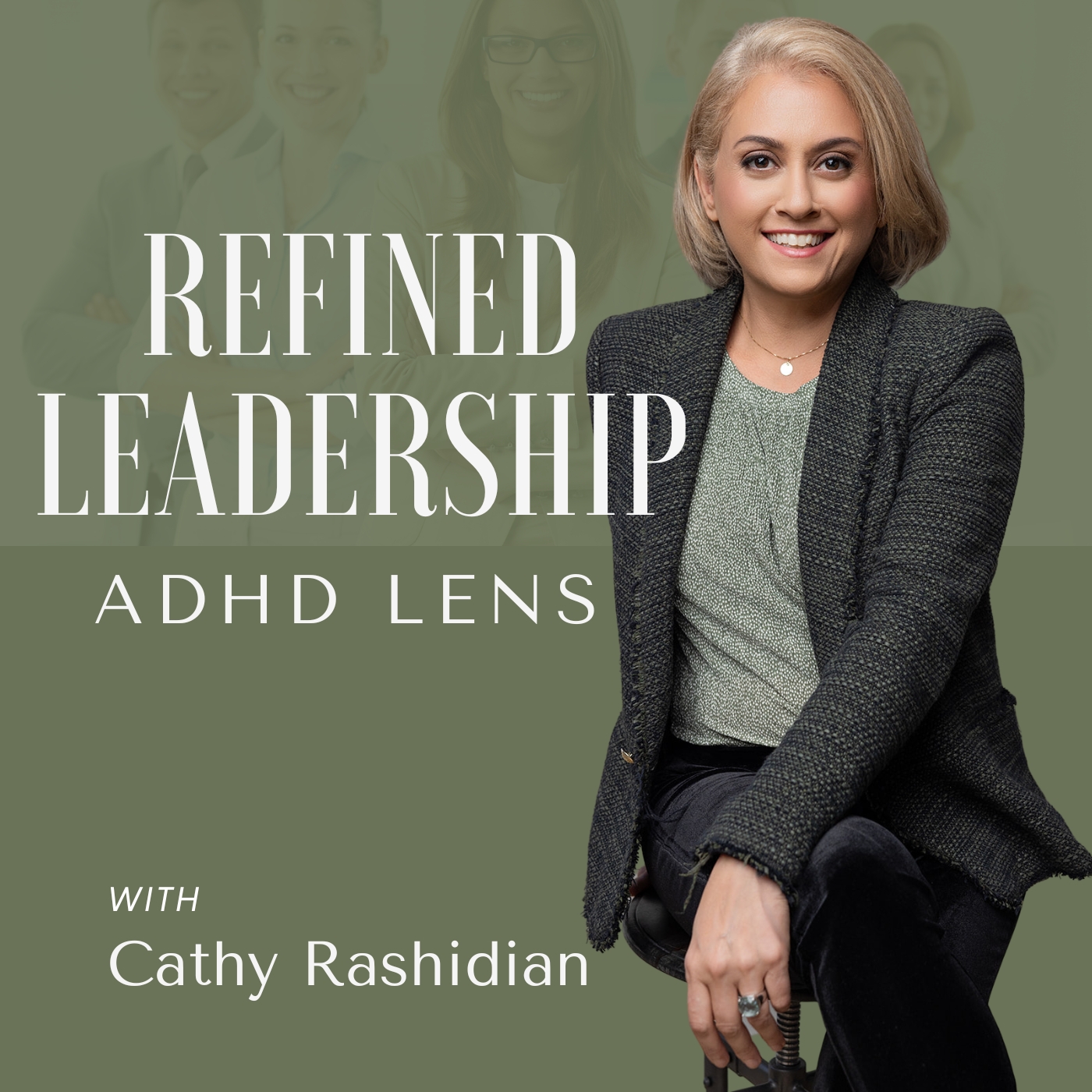
In this episode of Refined Leadership ADHD Lens, join Coach Cathy as she explores the power of living in truth and purpose for leaders with ADHD. Discover practical strategies for creating a personal mission statement and setting meaningful visions and missions. These tools go beyond typical productivity hacks, providing a foundation for decision-making, boundary setting, and building self-esteem.
Navigate the complexities of goal setting and time management with an ADHD-focused approach. Learn how aligning your actions with your authentic self can reduce rumination, indecision, and feelings of overwhelm. This episode is a hands-on training session designed to guide you towards intentional success, free from indecision and self-doubt.
Explore the steps to define your purpose, mission, and vision, and learn how to visualize your success effectively. Get ready to take actionable steps towards aligning your professional and personal life with your true values and strengths.
Visit ReadySetChoos.com for a free life values assessment and https://proudlyadhd.pro.viasurvey.org/ for a survey on character strengths.
If you’re part of the Quantum Thinkers Community, log in to access an exclusive worksheet for this exercise and share your progress with other members. Let’s grow together!
This episode offers a foundational framework that will be expanded into practical execution strategies in part two.
00:00 Introduction to Living in Your Truth and Purpose
02:18 Understanding ADHD and Goal Setting
02:52 Creating a Personal Mission Statement
03:24 Four Key Benefits of a Mission Framework
05:38 Addressing Rumination and Overwhelm
09:00 Steps to Align with Your Truth and Authenticity
09:52 Defining Your Purpose, Mission, and Vision
17:00 Actionable Takeaways and Resources
18:40 Conclusion and Next Steps
***********************************************************
Join our bi-weekly Group Coaching Quantum Thinkers' ADHD Community.
Join our Quantum Thinkers' ADHD Community for bi-weekly group coaching sessions. Tailored for professionals seeking guidance on managing ADHD in the workplace, Coach Cathy Rashidian offers valuable insights. Through her group coaching approach, she fosters growth and understanding among participants. Each session is limited to a maximum of 8 participants to ensure personalized attention.
***********************************************************
0:00 Welcome to Refined Leadership ADHD Lens with Kathy Rashidian. Discover how to refine your leadership through the lens of ADHD. Whether you're advancing toward a promotion or redefining your professional approach, you're in the right place. Join our community for tailored insights that elevate your leadership. Let's dive in. Welcome to another episode with Coach Kathy. Today in Refined Leadership, we are going to be talking about living in your truth and purpose For leaders with ADHD, if you've ever struggled with goal setting, making decisions, or even understanding where your life is headed, this episode is for you.
0:40 For professionals with ADHD, seeing the light at the end of the tunnel can feel almost impossible at times. But what if I told you that living in your truth and aligning with your purpose could make that tunnel a lot clearer. This episode dives into the power of creating personal mission statement and setting meaningful vision and mission so that you're not just using this as another productivity tool, but a foundation for decision-making, boundary setting, and building self-esteem. These strategies I believe truly help you to do three things.
1:25 Navigate the overwhelming process of figuring out what's next. Staying motivated when the ADHD brain gets bored and wants to derail you. And also feel confident and aligned with your direction in your career or be it in your life. Stick around because by the end of this episode, you'll have a better sense of how to embrace your truth and use it as a compass for wherever you're going. So if you are multitasking, I beg of you to listen to this episode once as you're multitask, come back to it again a second time and take a pen and paper and do the exercises that I'm going to walk you through.
2:10 This one is a bit of a self-paced training, if you will, that I'm putting in this episode. So let's talk about how ADHD shows up in goal setting. For those of us with ADHD, setting goals and thinking about the future often feels like staring into a foggy mirror. It's too hard to see the full picture. And I think I want to tie this to time blindness for us to see the future. Sometimes we can't even we don't even know what we're going to do next week. And I think one of the things that I really don't like is when people ask, what's your three-year plan? I don't know, dude. For now, I'm here. I'm living it up. So it can get jarring. But here's the thing.
2:52 Creating a personal mission statement, an impact statement, and aligning it with your truth and not masking isn't just a feel-good exercise. It actually gives you a practical tool that works uniquely well with this brain of ours that actually doesn't perform really well under uncertainty. And let's just be honest, no brain performs well under uncertainty, but ours is just a little bit extra intense. So when we anchor ourselves with a mission and purpose, we create a framework that supports, I believe, four things.
3:32 Here are these four things. Decision making. When we're in that framework, it gives us clarity when the ADHD mind is overwhelmed with options. Instead of second guessing every move, you have a guidepost to rely on. Secondly, boundary setting. Knowing your mission helps you say yes to what truly matters and no to what doesn't, protecting your energy and focus and also taming that shiny new object syndrome. Thirdly, motivation. Goals tied to a purpose ignite the brain to naturally get curious, be passionate about the thing, making it easier for us to stay engaged.
4:18 ADHD needs to be interested. It needs to be curious. We like it when we're in wonder and what's going to happen. A fourth and final thing that I like to bring into this framework that it supports is self-esteem. Living aligned with our values, purpose builds confidence. You're no longer fighting against yourself. You're embracing who you are and where you want to go. This isn't about perfection, people, or achieving some unrealistic ideal. I know many of us, this is being published in January at the beginning of the year. Here's another goal setting episode. But I want you to please pay attention to this. This is not your typical goal setting kind of an exercise.
5:02 This is about understanding the tools and mindset that work for you and using them to carve a path forward that feels authentic and also achievable. Here's a little plug. This is going to be a two-part episode. In this part, we are going to talk about the fundamentals things, the foundational things. And in the second part of this episode, which will be published later, we are going to go into, great, now you've set the mission, vision, and goal. How do we get it done? So there will be a part two of this. So now, there's another piece of ADHD lens that I want to bring in, which is about rumination and overwhelm. So without a clear roadmap, the ADHD brain has a tendency to fall into cycles of rumination and catastrophization.
5:50 As Dr. Ned Halewald would say it, we don't have that switch that says, wait, you're in ruminating, come back to doing the task. We can get sucked into rumination like it's nobody's business. So these are the nuanced challenges that often come with also this rumination and overwhelm wired brain. Three of them. Rumination. Our thoughts spiral around past decisions or future possibilities, creating a mental loop that are hard to escape. Another thing that happens in the absence of this framework, we sit in that overwhelming indecision. The constant generation of ideas and sheer number of possibilities can make it really feel impossible to even make progress, even though it's actually stimulating for us.
6:39 We won't make progress decision fatigue sets in and we end up stuck last but not least also we notice that we end up in shame and guilt often these are feelings creeping when we believe we're not living up to our potential how many times have we heard that in our lifetime or doing what we should be doing and these long-held beliefs weigh us down and keep us from moving forward So to combat all of this stuff. Creating this framework and roadmap becomes essential. I remember as I transitioned out of corporate life into business ownership, for me, this exercise that I'm about to give you all, I held that exercise close to my heart.
7:25 It was actually literally sitting at my desk for the first three years of my business. And now it's become ingrained in me. and actually every year I'll review it to see what I want to modify and delete. The structure that it gives us, as much as we can be anti-structure and routine, but what it does, it really helps with quietening that inner critic and reframing our negative beliefs. It provides just the right amount of challenge to spark interest and engagement. Remember, we're not going for far-reaching goals. We're looking for goals that actually, or the purpose or the mission that is just the right amount of difficult to get us into action.
8:10 And also it keeps us moving forward in a way that feels intentional and achievable. Another thing I always like to say to my clients is we want to move from accidental success to intentional success. For those of us high-performing, high-achieving leaders, we have done a lot in our lifetime. But sometimes, let's be honest, some of it was a little bit accidentally successful. And imagine if we created more intentional success. So by giving your brain a framework to follow, you're not just combating overwhelm. You're creating an environment where you can thrive, free from weight of indecision, self-doubt, and that little monkey always creating doubt in you.
8:53 So how do we do this? How to live in your truth and authenticity. There's three key steps that I think are fundamental to this. This exercise is all about aligning with your truth and authentic self. I am all about integrity, being our true self, but also to do it in a way that we come across as approachable, that we come across as people want to listen to us and that we don't overwhelm people around us. So there are countless ways to do this exercise. But after working with many professionals over the years that I've had the honor of coaching and also learning from top, top-notch mentors in the field of coaching, I have come up with the three key elements that I think are truly important to get this going. So, first one.
9:46 Defining your purpose, what does that mean? Purpose is the reason something is done or created or why something really exists. It's that impact statement for us. This is where in our heart of hearts, you feel aligned. It's what puts you in a state of flow and represents the impact you want to make. Think of purpose as the combination of your strengths, your talents, your values, all providing you a clear direction, a compass, if you will. So for example, I'll share with you a long format statement that is my purpose statement and a short one.
10:27 So when it comes to my coaching, my purpose statement, it goes like this. I guide leaders with ADHD to authentically amplify their strengths and craft their own path to success through empathetic, insightful coaching. My approach transforms professional perspectives and empowers my clients to inspire and lead others effectively, encouraging integrity and compassion in pursuing their dreams. Notice I'm using some key words in there like integrity, compassion, dreams, empathetic. These are some of the things that are within my values, strengths, and who I am at my core. So I bring that into my impact statement.
11:13 A shorter version of that could look like this. I empower leaders with ADHD to authentically amplify their strengths. Creating a ripple of positive change that naturally draws others in, making a heartfelt impact. So there's two different versions for your inspiration. But the biggest thing that how that purpose statement came about was truly looking at my values, strengths, and who I want to serve and how I want to serve my clients. So to create this purpose statement for yourself, there's three key questions that can help you create that same kind of a statement that I did.
11:54 And for those of you that are sitting in perfectionism right now, I want yourself to check in on Perfectionist Anonymous because this doesn't have to be perfect as long as you have a statement that you can continually modify. If you've never done this kind of work, you want to write your first bad draft, change it again, change it again, change it again. The ones that I read to you were truly not the same statements that I created seven years ago when I started going down the coaching path. It has evolved over time. So our purpose statement can truly change and be flexible. So here's three questions that you can support you build this statement.
12:34 I want you to answer these three questions. When do I feel most engaged with what I am doing? What lights you up? What do I care about most in the world? What am I doing when I feel most aligned with my strengths and values? Now, I'm not going to dissect what each question means because I want you to interpret it the way that you have interpreted and answer it the way that makes sense for you. So that there is no right or wrong answer. There is no like this is the way you're supposed to answer this question. There isn't. It's just answer the questions, sit with what it is, see what's on your heart.
13:17 So that's first step, defining your purpose. Second step is to define your mission. Your mission is essentially your strategy, the steps and tactics you will use to live into your purpose. These are actionable elements that help you align with your purpose. For the project managers that are listening to this, think of these as your milestones, the things that you need to hit to deliver the final project. So these are the key milestones that we want to hit. One of my examples is this. One of milestones within my mission is creating the Quantum Thinkers ADHD community, a space where leaders come together and grow together.
14:03 And this membership actually aligns with my purpose, which is about fostering connection, growth, and empowering professionals with ADHD. You see, this is one of the tactics that I have, that I have many more, that align to my purpose, that fuel it, that keep it going. So the question that I want you to think about is what strategies or actions will you outline that will fuel or live into your purpose? Write down the practical high level different ways that these strategies can come into play. All right, so we've done defining your purpose, then we went after defining your mission, and now the third one, which is the vision.
14:51 So in this one, we want you to create a vision or a mental image of what it looks like. What does it look like when you are doing this? So visualization is a powerful tool. Picture yourself living in alignment with your purpose and mission. Be detailed. What are you doing? Who are you speaking to? What activities are filling up your days? Imagine how it feels truly to live authentically and to create the impact you desire. The mental image serves as both an inspiration and also a reminder. It helps keep your goals vivid and tangible, making it easier for you to focus.
15:35 Now, here's the trick with this last one. As much as I say to be detailed about it, Don't go to the extreme of over-detailed about it, because what happens with us in our brain, if we give it way too much detail and you over-engineer it, you'll lose the motivation to actually execute because the brain goes, great, we did it, homework done. So there's a fine balance of when you're visualizing your vision and you're putting the details of all the different tasks and activities that you don't overdo it. And in the following episode, when we go into the doing part of this, how do you bring it to life? I will go more into that.
16:22 But for now, permission that you don't over-engineer your vision piece of this exercise. So we got purpose, which is about your impact, your mission, which is all the different things you're going to do to bring life to that impact, and the vision of how you're going to do it, what does it look like? So pulling it all together, as we bring this episode to a close, I want to leave you with a few actionable takeaways and resources to support your journey. If you're unsure about your life values and you're like well how do i even know what my values are i want you to go to ready set truths.com ready set truths.com my website on the home page you'll find a free downloadable link it's called life values assessment super free you don't have to pay for it just your email on the home page you can download that use that as exercise one, If anything, like before you even do the purpose, mission, blah, blah, blah, you could do a values assessment.
17:28 Now, if you're curious about your character strengths, because I talk about character strengths, right? I want you to check out viacharacter.org. They offer an excellent free survey to identify your top five strengths. And remember, I was incorporating my strengths in my mission statement or my purpose statement also. So a combination of those, knowing what your values are, knowing what your character strengths are, super important. And for my members inside the quantum thinkers community we will go deeper into this exercise and there will be a worksheet that we're going to work through together and for now i want you to you know mull over what we just talked about think about your mission state your purpose statement and mission statement and together we will do those exercises in our private community at at Quantum Thinkers.
18:24 So my friends, remember, living in alignment with your truth is a journey, not a destination. This whole life is a journey, honestly. Start small, reflect on one question, take one step. The important thing is that you're moving forward, not getting stuck in rumination. Even the smallest action, I always say, can create ripples of positive change in your work life, in your personal life, and in the lives of others truly. So you've got this, and I can't wait to hear how y'all are doing with aligning your purpose, mission, and vision statement.
19:05 And it's been a delight to deliver this little masterclass to you. And stay tuned for part two of this episode, where I will go into the execution part of things. So until next time, my friends keep on shining and keep on leading with. Music.


